
Project Description
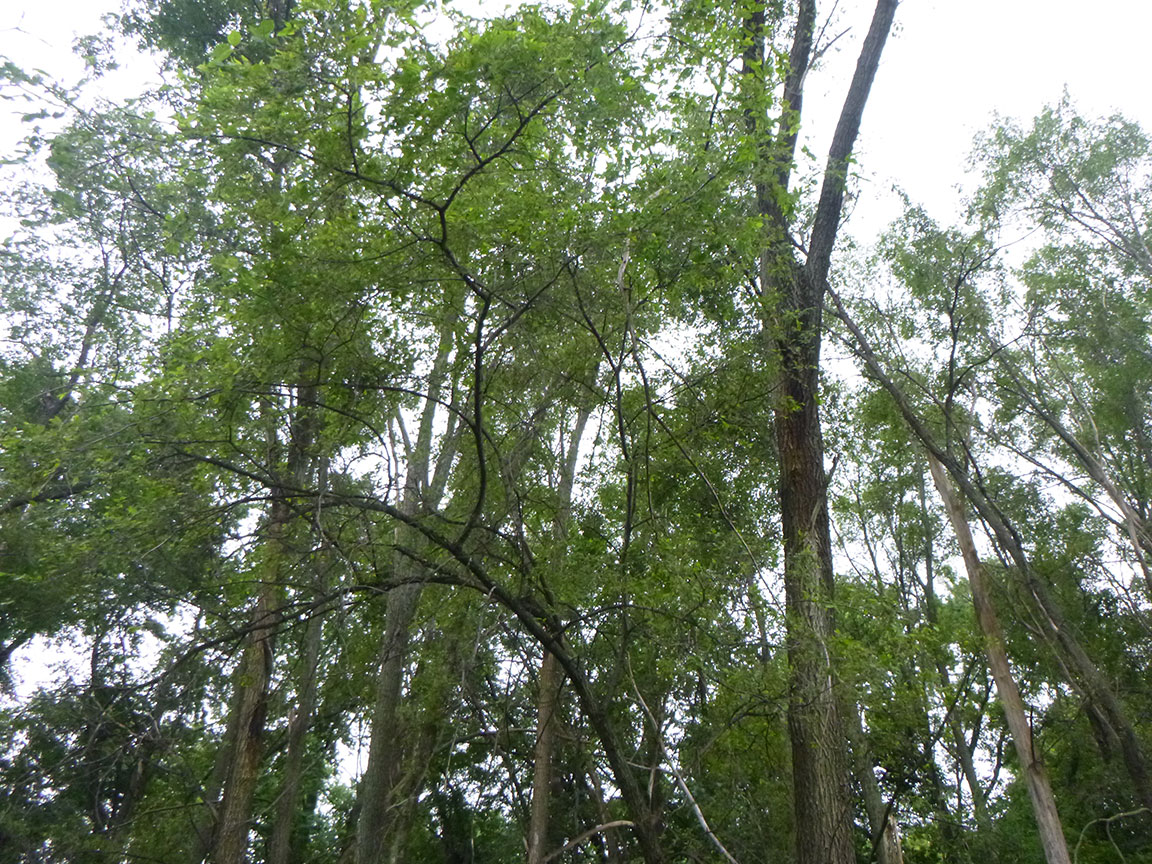
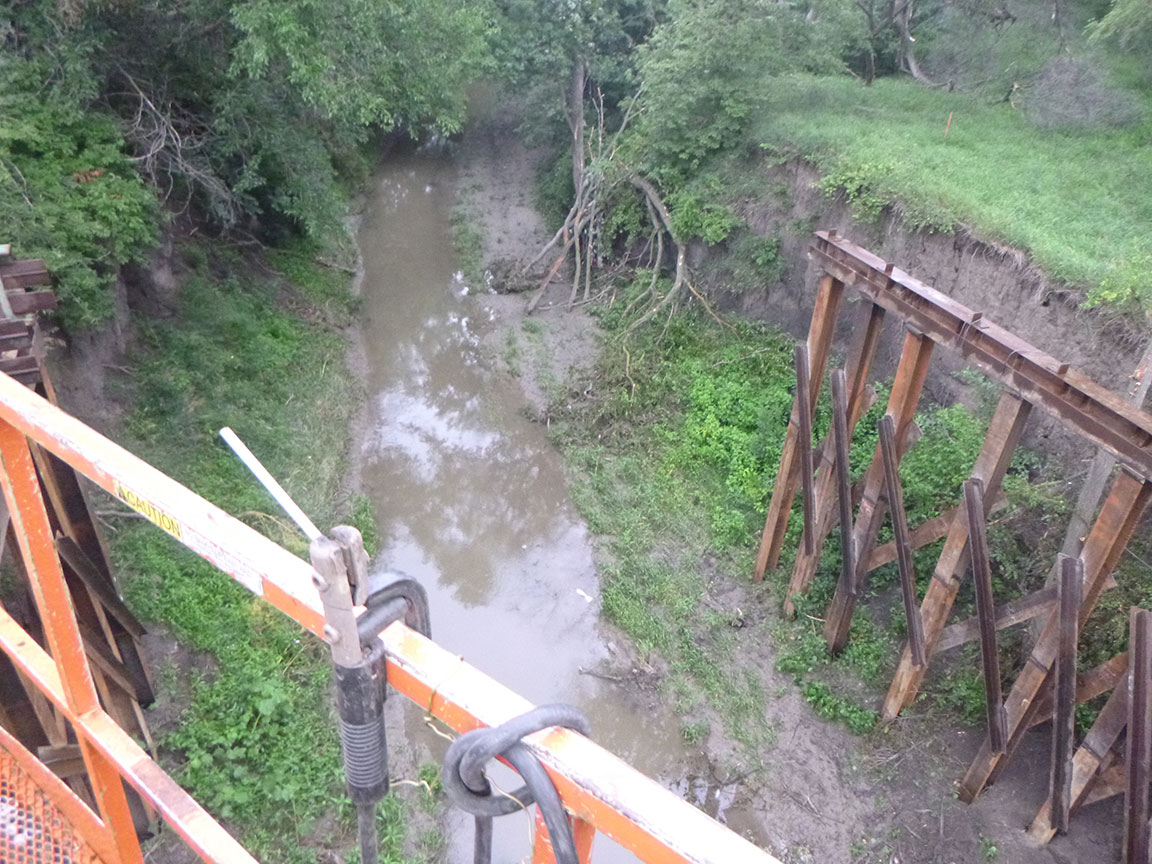
The overall goal of this project was to improve S. 180th Street and its intersection with Giles Road to accommodate increased traffic due to the development of the surrounding areas. To accomplish this, a temporary bridge had to be constructed over the South Papillion Creek to assist in the construction of the new route for S. 180th Street. Tree clearing was necessary for the construction of this temporary bridge. Seven trees were designated for removal on the south bank of the South Papillion Creek. In addition to an avian nest survey, this project included a bat habitat assessment, to determine if the trees designated for removal would be considered suitable roosting trees for the Northern Long-Eared Bat (NLEB).
Limited access to the project area required special planning. The project area was bordered to the south by an active railroad line and to the north by the South Papillion Creek, limiting the walk-in access. Coordination with the on-site contractor allowed our scientist to be transported across the creek in a boom lift to complete the nest survey.
No nests were identified and the trees were determined to not be suitable roosting trees for the NLEB. E&A communicated with the on-site contractor and informed them they were able to start work in the area. A photo log and written report were provided to the client to keep on file.
*Note: An avian nest survey must be conducted or supervised by a qualified biologist. Per Nebraska Game and Parks Commission recommendations, avian nest surveys should be completed no more than 5 days prior to the proposed tree or vegetation removal activities, but no more than 7 days can elapse under the MBTA. The MBTA is applicable year-round, but most migratory bird nesting in Nebraska takes place between April and September. Per Nebraska Game and Parks Commission, suitable roost trees for the NLEB consist of deciduous and/or pine live or dead trees or snags that are greater than or equal to 3-inch diameter at breast height (dbh) that exhibit peeling bark or have cracks, crevices or cavities. Individual trees may be considered suitable habitat when they exhibit characteristics of suitable roost trees and are within 1,000-feet of other forested/wooded habitat.

Key Partners
Hawkins Construction Company
Nebraska Game and Parks
U.S. Fish and Wildlife Service
Services Provided
"
"
"
"
"


